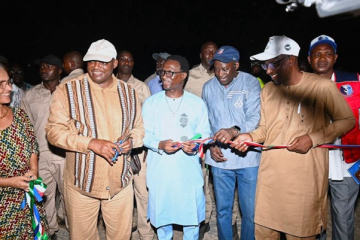
For decades, residents endured treacherous journeys on dilapidated tracks, cut off from essential services and economic opportunities.
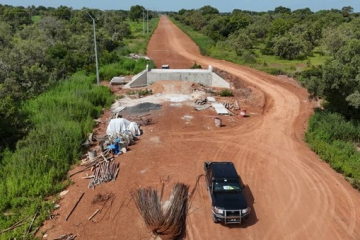
The 32km stretch, once synonymous with hardship, will now serve as a vital artery connecting communities long trapped in isolation.
Farmers anticipate easier access to markets and farms, students expect smoother journeys to schools, and health workers hope for faster emergency response times. The project is also expected to boost trade, agriculture, and social cohesion across the region.
The 35.2km stretch is divided into two sites within the CRR: the Sinchu Alhagie–Pateh Sam road (3.2km) in Niamina East, and the Cha Kunda–Sare Soffie–Chargel–Madina Duta Wally–Nyamen Kunda–Dobong Kunda–Bansang road (32km) in Upper Fulladu District.
Falling under Lot 1 of the GIRAV Feeder Roads Project, the initiative represents a major step toward improving rural connectivity and strengthening access to agricultural areas.
Supervised by Pace and Ceeteq Joint Venture (JV), the project is expected to ease the movement of people, goods, and services, thereby boosting local trade and livelihoods.
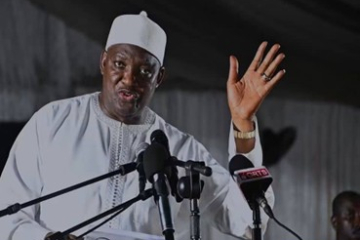
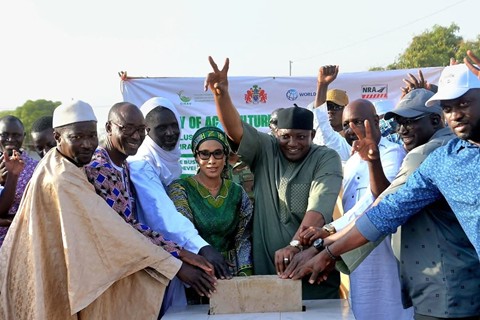
Speaking at the event, President Adama Barrow underscored the significance of road construction in boosting trade, linking communities to their farms, and improving the economy. Speaking at the foundation laying ceremony for the Sare Soffie road, he said the people of the area had endured years of hardship due to poor infrastructure, but those difficulties would soon be a thing of the past.
Barrow stressed that his focus remains firmly on development, not critics. “My intention is to uplift the living conditions of Gambians, especially those in rural areas which have been marginalised for years,” he said. He added that once completed, the road would open up access to electricity, schools, and other social amenities, fulfilling long-held aspirations of the inhabitants.
The Alkalo of Sare Siffoe, Sireng Sey highlighted the importance of the road in connecting communities. He noted that residents had struggled with poor roads since colonial times, through the Jawara and Jammeh eras, and now under Barrow. “Today, President Barrow is laying the foundation of these roads which have been a nightmare for us. We also have electricity, so it is important that we all support the president. It is only the government that can bring development to us,” he said.
Ali Momodou Touray, chief of Upper Fulladou District, described the road as a ‘jihad’ due to the immense difficulties faced by locals. He stressed its importance, noting that many pregnant women had lost their lives because of the poor condition of the road. He explained that about 50 communities rely on the 32km stretch to reach Santanto Bubu, Basse, and Bansang, and said the project would ease farmers’ access to markets. Touray assured the president of continued support to achieve his developmental goals.
Women’s representative Fatou Sama praised the president’s efforts in rural electrification, borehole construction, and road development. She pledged women’s support but urged Barrow to extend assistance to veterinary and agricultural camps to help achieve food self-sufficiency.
Youth coordinator Ma Sanneh Sanyang hailed the president for rapid development, noting that residents had prayed for this road for 60 years without success. “Within just 10 years of Barrow’s government, the road is now to be constructed. This clearly indicates that the president is concerned about the challenges Gambians face and is ready to address them,” he said.
Bakary Kora, National Assembly Member for the area, commended the government’s projects. “Whether you support the president or not, what is unquestionable is the fact that President Barrow is really developing the country across all sectors,” he said.