The initiative, supported by the World Bank and the Government of The Gambia under the GIRAV project, marks a turning point in the nation’s water supply and management system. With a staggering investment of $23 million channelled into component six of the project, NAWEC is set to expand and upgrade rural water supply, sanitation, and hygiene (WASH) services in selected communities across the country.
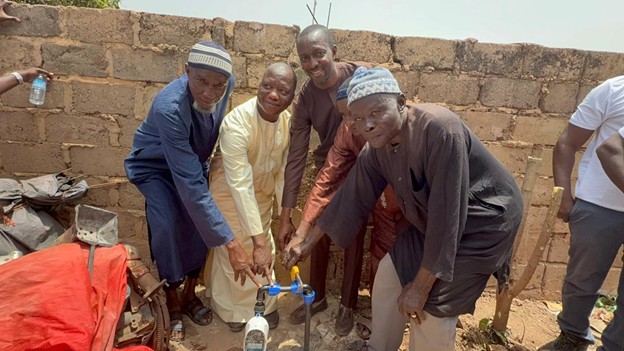
The new initiative, launched in Bansang and dubbed NRW, will be rolled out nationwide, with the GIRAV project providing 12 thousand smart meters for free installation.
For Bansang, where residents have endured decades of water system failures, sometimes forced to abandon drinking water altogether due to its poor quality – the launch signals a new era. The smart meters will not only reduce losses caused by outdated infrastructure but also ensure that households receive consistent, safe drinking water.
Through the project, over 162 million dalasis has been invested to drill five boreholes in Bansang, construct a water treatment plant, and rehabilitate the community’s water storage tank. Officials confirmed that the work is expected to be completed within a year, finally addressing the decades-long water crisis that has haunted Bansang.
The rollout will extend to Janjangbureh, Bansang, and Basse, marking a regional transformation in service delivery. NAWEC officials stressed that the modernisation is more than just a technical upgrade; it is a lifeline for communities whose health, livelihoods, and dignity depend on reliable access to water.
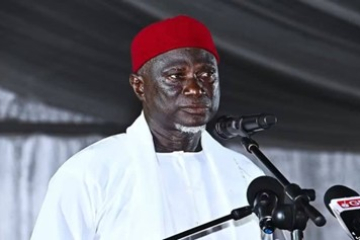
Speaking at the launching ceremony, the deputy governor of CRR, Sainey Mbaye, reaffirmed government’s commitment to clean water nationwide. He praised the World Bank and GIRAV project for their support, stressing that digitisation is the way forward. “The President has always been concerned about Bansang’s water system, which is why he ensured partners were brought on board,” he stated.
Momodou Lamin Sompo Ceesay, deputy managing director of NAWEC, commended the GIRAV project and the people of Bansang for their cooperation. He explained that Bansang was chosen because of its strategic institutions, including hospitals and crossing points. “If this phase succeeds, implementation will be rolled out to Basse and other places,” he assured.
He stressed that installation of the meters is free of charge, adding that both households with existing meters and those without will be catered for. He praised the community for taking ownership of the project, noting: “No matter how much money a project has, without community support, achieving objectives is difficult.”
Mbakeh Jaiteh of NAWEC highlighted the significance of component six of the GIRAV project, valued at $23 million, which focuses on water expansion. He explained that Bansang was selected following a feasibility study of its water system. “The second component is upgrading the water system, which is why we are gathered today,” he said, adding that expansion will extend to neighbouring communities such as Solo and Bantanto.
Jaiteh reaffirmed NAWEC’s commitment, saying: “Any water we provide to Bansang will be fit for drinking.” He noted that the issue had reached the National Assembly, Cabinet, and even the President, who remains deeply concerned about the situation.
Abba Saho, Water and Sanitation Engineer for GIRAV, emphasised the urgency of the project. He confirmed that five boreholes have already been dug and contractors are progressing well with the treatment centre. “Bringing enough water without enough meters would create issues, which is why GIRAV, with World Bank support, decided to purchase meters,” he explained.
Demba Chune, Senior Commercial Manager of NAWEC’s Water Business Unit, demonstrated the difference between the old analogue meters and the new smart meters. He explained that the outdated meters often spoiled, leading to massive water wastage and losses for NAWEC. “The smart meter comes with advanced technology that allows staff to monitor readings remotely, reducing errors and eliminating wastage,” he said.
Hon. Bakary Kora also highlighted the importance of the project, cautioning against individuals who might attempt to exploit the initiative by requesting money from residents. He raised concerns about sustainability after the project phase-out, questioning whether a prepaid system similar to electricity meters could be introduced for water.
Responding, NAWEC official Demba Chune clarified that meter replacements after the project phase-out would be NAWEC’s responsibility. He noted that the World Bank had rejected a prepaid water system, stressing: “Water is a fundamental human right and must remain accessible to everyone.”
Alhagie Dibba, Head of Water Planning at NAWEC, addressed concerns about underground pipes in Bansang. He explained that while pipes would not be replaced, they would be thoroughly cleaned to ensure quality water.
The Chief of Upper Fulladou, Ali Modou Touray, described the forum as “crucial in government’s attempt to provide a clean water system in the area.” He hailed the GIRAV project for transforming what was once a chronic crisis into history, thanking the government and partners for their support.