In his testimony, Balla Kandeh told the court that the police obtained a statement from him when he was suffering from a sickness called peripheral neoplasm.
Kandeh made this revelation when his lawyer, K. Jallow showed him two police statements for identification. He identified them and told the court that the statements were taken on his behalf.
When Counsel K. Jallow asked what he meant by the statements were taken on his behalf, Kandeh told the court that because he was sick at the time.
“I was actually sick because on the day that I reported there, they (Police) told me that I should make a second statement. So they told me to write a statement. I told them at the time that my hands were swollen and my feet were also swollen,” Kandeh told the court.
Kandeh testified that he was suffering from a condition called peripheral neoplasm. He said as both his hands and feet were also swollen at the time, he could not write a statement.
Kandeh further testified that the police insisted that his statements had to be taken, otherwise, he would not go home.
“Despite the condition that I presented to them (police), despite the situation at that time, they insisted that I must give a statement or I would not go home,” he testified.
Kandeh told the court that he went to the Medicare Clinic three days before reporting to the police. He said a peripheral neoplasm is a condition that comes as a result of nerve damage.
Kandeh testified that nerve damage affects the lower limbs of the body, especially the arms and feet. He said it leads to tingling of the lower limbs, tingling and burning sensations, and also numbness.
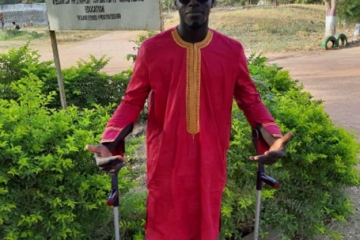
Kandeh told the court that he took picture of his swollen hands and feet.
“It affects the entire part of your body. So that is what affected me in those days,” he testified.
Counsel K. Jallow then handed over a medical prescription paper to Kandeh for identification, and he identified it as the prescription issued to him at the Medicare Clinic.
Counsel K. Jallow applied to tender a document as a defence exhibit, which was admitted into evidence without objection from the prosecution.
Jallow also sought to tender five pictures of Kandeh's swollen feet and hands, but the DPP objected, citing the images were from a video recording and the witness wasn't the maker. Jallow countered that the prosecution didn't cite a legal basis for the objection, and the witness had taken the photos himself.
Hon. Justice Ebrima Jaiteh overruled the objection, citing Section 3 of the Evidence Act 1994, which governs relevance. He ruled the photos were relevant, depicting the witness's physical condition, and corroborated the medical prescription note. The photos were deemed primary evidence under Section 98 of the Evidence Act 1994, and the objection was overruled.