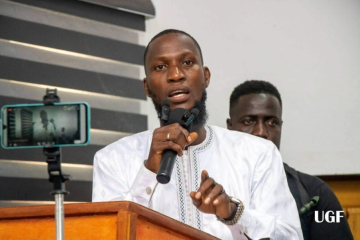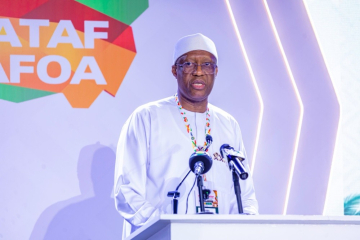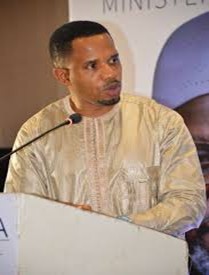
Dr. Ceesay said the estimate of 40,000 irregular entries comes from research conducted between 2014 and 2019, work he said he was personally involved in as part of a research consortium with Vrije Universiteit Brussel in Belgium. According to him, many of those departures happened before the end of former President Yahya Jammeh’s rule in 2017.
He described the years leading up to 2016 as the peak period of irregular migration from The Gambia, pointing to figures showing that 11,929 Gambians arrived by sea in Italy in 2016 alone, making it the highest year on record. He said this sharp rise took place during the final years of Jammeh’s authoritarian rule.
Dr. Ceesay also suggested that about 8,500 Gambians left through irregular routes between 2013 and 2017, driven by political repression, economic hardship and limited opportunities. He attributed this assessment to the European External Action Service.
After Jammeh’s departure and the election of President Adama Barrow in 2017, Dr. Ceesay said irregular migration initially declined from its peak years, partly influenced by broader cooperation between the European Union and Libya.
He acknowledged that until 2019, The Gambia still ranked among the top ten countries of origin for migrants arriving in Europe without regular visas, according to a study by Dr. Ibrahim Assisi of the Birmingham School and researchers Alice Bellagamba and Elia Betura.
However, he argued that more recent figures show a significant downturn. With the reopening of the Atlantic and Canary Islands routes, Gambian arrivals in Europe, he said, have drastically decreased, citing a figure of 199 arrivals between January 2020 and February 2021.
“These are the numbers,” Dr. Ceesay said. “So when people say I was misleading the public, that is unfair. What has increased is not irregular migration, but the reporting.”
He stressed that while the desire to migrate still exists, fewer people are completing the journey. He revealed that authorities intercepted about 2,000 potential migrants in the past year alone, showing that attempts continue but outcomes have changed.
Dr. Ceesay maintained that irregular migration remains a problem and a national concern, but insisted that claims that it has worsened under the current administration are not supported by the data.
“Yes, it is still happening. Yes, it is still a challenge,” he said. “But the figures do not show an increase compared to the pre-2017 years. 2016 was the highest.”
He warned, however, that declining figures should not breed complacency within government. Reflecting on the optimism that followed the 2016 election, he recalled young people celebrating and chanting “No more Backway,” driven by high expectations of rapid change.
According to him, the government has focused on addressing the root causes by expanding opportunities through scholarships, skills training centres, vocational institutes, and investor-friendly policies aimed at job creation.
Still, he argued that migration decisions are not always linked to poverty or unemployment. Drawing on his academic background in migration studies, Dr. Ceesay said he has known people who were financially stable, employed, or running successful businesses, yet chose to leave.
As the 2026 presidential election approaches, Dr. Ceesay criticised what he described as the politicisation of the backway issue, challenging opponents to offer practical alternatives rather than emotional rhetoric.
“Let us debate with facts, let us have an honest discussion.”
He concluded by noting that many of The Gambia’s current challenges are inherited and that development requires long-term planning, warning that without such foresight, countries inevitably struggle to keep pace with demographic and economic pressures.