If you travel across West Africa long enough, you will eventually find yourself in a village, a mosque, a school or a market where someone proudly introduces himself as Ceesay — or spelled as Ciise, Cissé, Sesay, Siise, Sesai, depending on the spelling used in the country’s official language. The name appears in dusty desert towns and crowded city neighbourhoods, in family compounds, on gravestones and on the doors of Qur’anic schools. It is familiar, it is respected and woven deeply into the regions’ history.
Yet for all its familiarity, the story behind the name is not widely known, even among those of us who carry it.
What emerges from oral tradition, early chronicles and modern research is a lineage whose influence stretches from ancient empires to the great centres of Islamic scholarship and into the present day. The Ceesay story is not simply a chapter of West or Northeastern African history; it is one of its foundations.
Where the Story Begins
The origins of the Ceesay name lead us back to the early Wagadou Empire, often known as ancient Ghana. Long before Europe had universities and centuries before Mali rose to global fame, Wagadou was already a powerful and organised state, and it was governed by rulers whose names still echo in the region’s memory.
Among these early leaders were figures like Kaya Magan Cisse and Jabbi Ceesay, who appear in griot accounts as unifiers of the kingdom. Their authority rested not only on political leadership but on something that was revolutionary at the time, which wascavalry.
In the ancient Soninké language, the word associated with “Ceesay” points to a horseman or a man on a horse. Not just anyone who just rode horses, but one who led, those who fought and ruled from the saddle of horses. Long before cavalry became common in West Africa, the early Ceesay are remembered as the people who brought speed, mobility and military sophistication to the empire. It changed everything: from trade, security, and the reach of Wagadou’s influence.
Some older traditions speak of our ancestor calledDinga Cisse, who is said to have come from the Arabs or Barbers of the desert regions. In a landscape where families regularly crossed the Sahara, where trade, scholarship and faith moved in all directions, such stories reflect how connected Wagadou was to the wider world, especially to the Arab Moors and Berber communities of the desert.
Whether the early Ceesay were of purely Soninké origin or descended from Arab desert travellers will always remain open to debate. What is beyond dispute is that they formed one of the earliest recognised ruling houses of West Africa’s first great empire.
A Shift in Destiny
History rarely keeps any family in one role. As the Mali Empire rose under Soundiata Keita in the 13th century, the political centre of gravity moved from Wagadou to the Manding. Yet the Ceesay did not disappear. Instead, they underwent a remarkable transformation.
In early Manding memory, the Ceesay were among the first families to spread Islam in the region. They appear not only as warriors but as people of faith and discipline. During Sundiata’s famous conflict with Sumanguru Kanté, the Ceesay stood alongside him, led by Bougariba Ceesay.
When Soundiata regained control of the Manding, he honoured the Ceesays with a prominence to a title that would shape our destiny for centuries and it is called; “Manding Morry”, which translates to‘custodians of faith and knowledge’.Some historians add that the title originatedfrom the indigenous people of Manding. The Ceesay were the cavalry-borne guides who came from the desert Arabs and the Moors, with “Cee” meaning “to sit upon” and “Say” referring to horses or caravans in the old Soninke and Mandinka languages. In essence, the Manding people gave the surname Ceesay to those who arrived on caravans and horseback, bringing knowledge, Islam and spiritual guidance to the community.
With this title, the Ceesay identity expanded from war and power into scholarship and spiritual leadership. Across the Manding world, the name became tied to Qur’anic learning, justice, guidance and moral integrity. In some areas, “Ceesay” simply meant “the scholar” , a person trusted to teach, to mediate and to lead.
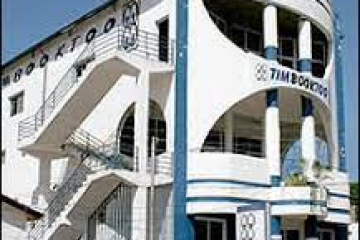
Timbuktu and the Guardians of the Library
If Wagadou represents the political origins of the Ceesay story, Timbuktu represents its intellectual flowering. For centuries, Timbuktu was a centre of global learning. Its great mosques such as Sankore, Djinguereber and Sidi Yahya operated as universities long before Oxford or my alma-matter Cambridge took shape. Students came from across the Sahara to sit at the feet of jurists, astronomers, theologians and mathematicians. Manuscripts were copied by hand,and traded, inherited and protected like treasures.
Generations later, the Ceesay name became deeply entwined with this world of scholarship.
In 2012, when al-Qaeda-linked terroristgroup called Ansar al-Deen stormed Timbuktu and began burning manuscripts, one of the men who refused to let the city’s heritage disappear was Abdoulaye Cissé. Abdoulaye was a senior official at the Ahmed Baba Institute. As militants advanced, he and his colleagues gathered the manuscripts quietly, packed them into trunks, loaded them onto donkey carts and smuggled them through back alleys and darkened streets to the river.
Over several nights, thousands of manuscripts were moved out of the city in one of the most daring cultural rescue operations in modern African history. Without that effort, a millennium of written knowledge in theology, medicine, science, and law would have been lost.
The symbolism is impossible to miss: the same Ceesay lineage that once protected empires from horseback was now protecting history itself.
A Journey Across the Atlantic: The Story of Muhammad Sisei (1788–1838)
The resilience of the Ceesay tradition did not end at the borders of West Africa. One of the most remarkable examples appears far from home, across the Atlantic, in the life of Muhammad Sisei. Muhammed Ceesay’s story remains one of the clearest and best-documented cases of a West African Muslim enslaved abroad who never abandoned his faith, identity or learning.
Born in The Gambia in 1788, Muhammad Sisei (Ceesay) was taken to the Caribbean during the era of the transatlantic slave trade. Despite the brutality of enslavement, he maintained his Islamic practices, his literacy and his dignity. Unlike most enslaved Africans, who were cut off from their families and cultures forever, Sisei’s determination and knowledge allowed him to survive with his identity intact.
He prayed as a slave, wrote books while in captivity, and taught other slaves, and preserved the memory of home. And most astonishing of all, Muhammed Ceesay successfully found his way back to the Gambia in West Africa in 1838.
His life stands as a powerful extension of the Ceesay legacy: a scholar carried across an ocean against his will, who still managed to protect the faith and knowledge of his ancestors under the harshest possible conditions. Where others lost their origins, he guarded his. His story sits firmly within the centuries-old tradition of Ceesays defending not just land and books, but identity itself.
A Family That Leads in Faith
Today, the Ceesay name continues to appear in the heart of religious life across West Africa. In Medina Baye, Senegal, one of the world’s most influential Tijaniyya communities, the imamate and leadership have long rested with the Cisse family.
Scholars such as ImamSheikh Hassan Cisse and Sheikh Ahmad Tijani Ali Cisse are widely respected not only for their knowledge but for their global engagement, representing West African Islam at major conferences, universities and international bodies.
In The Gambia, the name appears across mosques, Qur’anic schools and community leadership structures. In villages in Kiang, Baddibu, Dangkunku, Wuli, Basse and towns in Kombo, Ceesay elders serve as imams, teachers and advisers — roles consistent with the longstanding image of the family as guardians of scholarship and faith.
Across Mali, Senegal, Ivory Coast, Guinea Conakry, Sudan, The Gambia and the diaspora such as Trinidad, the Ceesay identity remains rooted in a mixture of humility, discipline, learning and responsibility.
The Weight of a Name
After tracing this long arc from ancient cavalry to Islamic scholarship, from Arab desert empires to the libraries of Timbuktu , one truth becomes very clear:A name like Ceesay is not merely inherited. It is lived. It is a reminder of where we come from and what we must protect, which are knowledge, integrity, community and faith.
For those us who carry the name today, the history is not a burden or a decoration.
It is a call to walk with the same dignity, courage and responsibility that defined the people who built empires, introduced learning and risked their lives to save manuscripts in the desert night.
The story of the Ceesay is not finished. It is still unfolding, and I will document it to a well-researched book to be carried by the next generation. And as long as the values of scholarship, leadership and service remain alive, so will our legacy.