The forthcoming visit of the Deputy Managing Director of the International Monetary Fund to The Gambia provides an important opportunity for reflection and clarification. Among many Gambians, there is a widespread perception—sometimes even a misperception—that the IMF is the institution that determines economic policy in our country.
It is therefore useful to clarify the role of the IMF and to distinguish between policy advice and sovereign decision-making.
First and foremost, economic policy in The Gambia is determined by the Government of The Gambia, led by the President and implemented through institutions such as the Ministry of Finance and Economic Affairs and the Central Bank of The Gambia. These institutions are responsible for designing and implementing national economic policies in accordance with the country’s development priorities.
The IMF does not govern The Gambia, nor does it impose policies in the way many citizens sometimes believe. Rather, the IMF is an international financial institution established to promote global financial stability, economic cooperation, and balanced growth among its member countries.
When countries such as The Gambia face economic pressures—whether related to fiscal deficits, debt sustainability, or external shocks—they may request financial support and technical assistance from the IMF. In return, the IMF works with the government to design programmes aimed at stabilizing the economy and restoring macroeconomic balance.
In essence, the IMF provides financing, technical expertise, and policy advice, while the sovereign government retains responsibility for adopting and implementing the policies.
This partnership is not unique to The Gambia. Across Africa and around the world, many countries collaborate with the IMF during periods of economic reform or adjustment. The objective is usually to strengthen fiscal discipline, stabilize inflation, improve public financial management, and restore investor confidence.
For The Gambia, IMF-supported programmes have played an important role in helping stabilize the economy during challenging periods. They have supported reforms in public financial management, improved transparency in fiscal operations, and helped mobilize support from other development partners such as the World Bank and the African Development Bank.
However, it is equally important that Gambians understand that economic reform programmes are implemented by the Government itself, often in pursuit of objectives that align with national development priorities such as fiscal sustainability, economic stability, and inclusive growth.
Where misunderstandings sometimes arise is when difficult economic decisions—such as reducing subsidies, improving tax collection, or restructuring state-owned enterprises—are attributed entirely to the IMF. In reality, such measures are often necessary policy choices that governments must confront in order to maintain economic stability and avoid deeper financial crises.
The IMF may recommend certain policy actions, but ultimately it is the responsibility of the government to decide which policies are adopted and how they are implemented.
The visit of the IMF Deputy Managing Director therefore offers an opportunity not only for continued economic cooperation, but also for strengthening public understanding of how international financial partnerships function.
It should also serve as a reminder that economic development requires strong national institutions, sound policymaking, and responsible fiscal management. International partners can support these efforts, but they cannot substitute for national leadership and accountability.
Ultimately, the success of The Gambia’s economic future will depend not only on the support of institutions such as the IMF, but also on the effectiveness of our own policies, institutions, and governance systems.
As the country continues its journey toward sustainable development and economic transformation, it is important that Gambians engage in informed dialogue about the role of international partners, while maintaining confidence in the country’s sovereignty and capacity to shape its own economic destiny.
The IMF may advise and support—but the responsibility for economic policy in The Gambia ultimately rests with Gambians themselves.
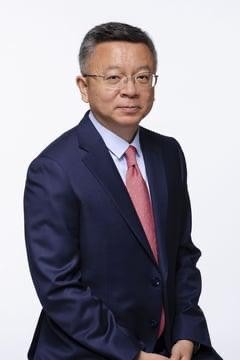
Mr. Bo LI assumed the role of Deputy Managing Director at the IMF on August 23, 2021. He is responsible for the IMF’s work on about 90 countries as well as on a wide range of policy issues.
Before joining the IMF, Mr. Li worked for many years at the People’s Bank of China, most recently as Deputy Governor. He earlier headed the Monetary Policy, Monetary Policy II, and Legal and Regulation Departments, where he played an important role in the reform of state-owned banks, the drafting of China’s anti-money-laundering law, the internationalization of the renminbi, and the establishment of China’s macroprudential policy framework.
Outside of the PBoC, Mr. Li served as Vice Mayor of Chongqing—China’s largest municipality, with a population of over 30 million—where he oversaw the city’s financial-sector development, international trade, and foreign direct investment. Mr. Li was also Vice Chairman of the All-China Federation of Returned Overseas Chinese. He started his career at the New York law firm of Davis Polk & Wardwell, where he was a practicing attorney for five years.
Mr. Li holds a Ph.D. from Stanford University and an M.A. from Boston University, both in economics, as well as a J.D., magna cum laude, from Harvard Law School. He received his undergraduate education from Renmin University of China in Beijing.
Last updated: August 23, 2021